Gutter Cleaning & Repair in Kokomo, IN
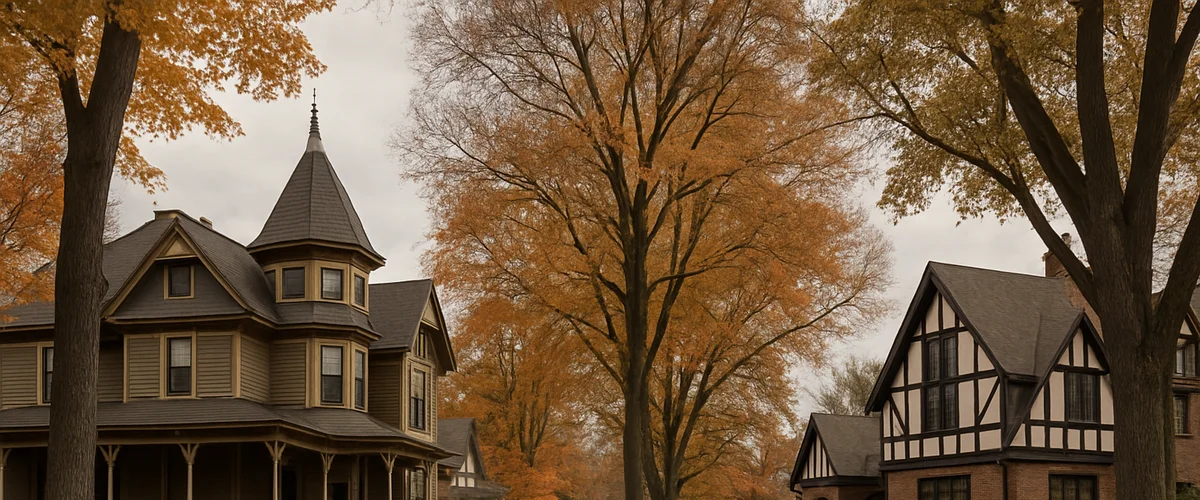
Kokomo is our home base, and it's also the city we know best down to the street level. Founded in 1844 and later known as the "City of Firsts" for its role in early automotive history - Elwood Haynes tested one of the first American automobiles on its streets in 1894 - Kokomo has a genuinely old core, and a lot of that history survives today in the tree canopy planted alongside its oldest neighborhoods. Decades-old maples and oaks now shade streets in the Old Silk Stocking Historic District and around downtown that were bare when the town was young, which is good for curb appeal and property value and hard on gutters every fall.
We're in Kokomo on a regular route, not as an occasional stop between other cities, which means same-week scheduling for most requests and a genuinely accurate sense of which streets need a fall-and-spring cleaning schedule versus which newer builds can get by with an annual visit.
The Old Silk Stocking Historic District, just north of downtown, carries the heaviest original tree canopy in the city - Queen Anne and Tudor Revival homes under mature maples and oaks that drop a serious volume of leaves every fall. Downtown Kokomo and the older residential blocks around it have a mix of century-old street trees and mid-century infill, with fascia boards on the oldest homes original enough that they need a gentler touch during cleaning and a closer look for hidden rot. Fairlawn, south of downtown, is a steady mix of established trees and mid-size lots that typically lands on a twice-a-year schedule. Wildcat, on the south and west side where the city gives way to farmland, and the newer subdivisions on the edge of town generally have thinner tree cover and can often stretch to an annual visit.
Kokomo sits on Wildcat Creek in flat, north-central Indiana, with a humid continental climate that swings from hot, humid summers to cold winters with regular snow and ice. Howard County gets roughly 40 inches of precipitation a year spread fairly evenly across the seasons, so there's no single "rainy season" to plan around - instead, the real stress on a gutter system comes from the heavy leaf-drop of fall followed almost immediately by freeze-thaw cycling all winter long. A gutter that's still holding wet leaves when the first hard freeze hits can end up packed solid with ice, which adds weight and can pull hangers loose from the fascia.
The biggest recurring issue is sheer debris volume from the mature tree canopy - maple and oak leaves in fall, and seed pods and small branches in late spring. On the oldest homes near downtown and in the Old Silk Stocking Historic District, original wood fascia that's now a century old is also a genuine weak point; years of freeze-thaw cycling have softened some of it enough that a heavy, ice-packed gutter can pull fasteners loose faster than it would on a newer house. Homes on flatter lots and near low points in the yard see more standing-water problems simply because water takes longer to drain off the property generally, which makes a clear-flowing gutter and a downspout that discharges well away from the foundation more important than on a well-graded lot elsewhere in town.
Kokomo is our primary route, which means we're moving through the Old Silk Stocking Historic District, Fairlawn, downtown, Wildcat, and the newer subdivisions on the edge of town on a weekly basis - not as an add-on to a route based somewhere else. That local density is why we can usually offer same-week scheduling here versus a slightly longer lead time in Russiaville, which we run as a set route day given its smaller, more spread-out layout. If you're near a boundary - say, close to the Greentown line or out toward the county line on US-31 - just mention it when you call and we'll confirm you're on our path.
We text or call ahead with an arrival window rather than a vague "sometime this week." On arrival, we walk the exterior first to check overall gutter condition and confirm access - ladder placement on an older Historic District lot with mature landscaping looks different than a flat driveway in a newer subdivision. If it's a first-time cleaning, we'll point out anything unusual we find, like a downspout that's clearly been draining next to the foundation for years, before starting work rather than after. Debris comes down by hand into haul bags, downspouts get flushed to confirm real drainage, and we do a final walk-around so you can see the work before we leave, not just take our word for it.
For repeat customers on a fall-and-spring schedule, most visits are quick since we already know the property - which sections tend to sag, whether a low corner of the yard needs extra downspout attention, that kind of detail carries over visit to visit instead of starting from zero every time.
| City | Distance from Kokomo | ZIP |
|---|---|---|
| Greentown, IN | ~9 miles east via US-35 and SR-22 | 46936 |
| Russiaville, IN | ~9-12 miles southwest via SR-26 | 46979 |
| Peru, IN | ~20 miles north via US-31 | 46970 |
| Tipton, IN | ~20 miles south via US-31 | 46072 |
Kokomo-specific service pages:
Yes - our regular Kokomo route covers the full 46901 area, from the Old Silk Stocking Historic District and Fairlawn down through downtown and the newer subdivisions on the edge of town.
The Old Silk Stocking Historic District and other older blocks near downtown, both planted with mature maple and oak cover going back generations, typically need cleaning twice a year. Newer subdivisions on the edge of town with less tree cover often stretch to an annual visit.
In most cases, yes, since our route already passes through on the way to or from Greentown and Russiaville. Call and give us your address and we'll confirm.
Tell us a bit about your home and we'll follow up with a straightforward price - usually the same day.
Prefer to talk? Call (765) 632-2162.
Call or request a quote and we'll get you on the schedule this week.
Get a Free Quote